
"I'll get to the binder this weekend." You just watched six of those weekends. Orientation that lives on paper is competing with everything else in a volunteer's life, and it loses.
Orientation gets finished when it is small enough to do in the gaps. A short film, half a page of text, one check at the end.
Material that fits a spare ten minutes gets done. Material that needs a free evening waits for one.
Why short pieces finish
A volunteer with a whole evening free is rare. A volunteer with ten spare minutes happens most days, and that is the unit the material has to fit inside.
So cut it into pieces that each end somewhere. A piece that ends leaves a mark on the record.
A piece that trails off leaves nothing behind, and the member starts it again from the top a month later.
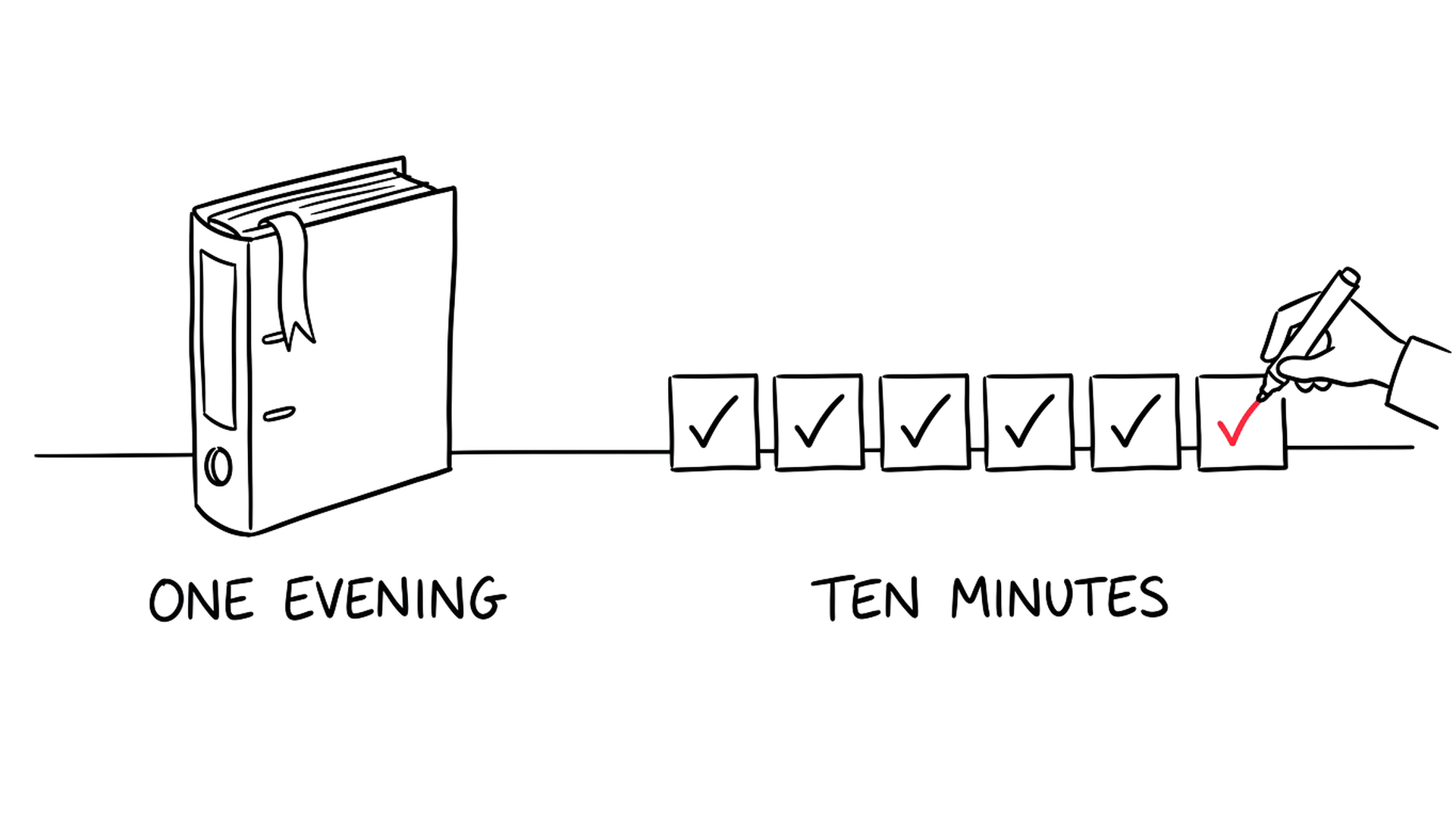
Progress the member can see tells them how far along they are, and tells an officer who has stalled and who has not opened it yet.
Check yourself
Two situations. Your answers stay on this page and go nowhere.
A member starts orientation and stops after the second piece. What does a visible progress marker give an officer?
One person to ask one question, this week
A reason to shorten the material
Evidence the member has lost interest
A marker shows the stall and says nothing at all about its cause. What it buys is a specific conversation with a specific person while the stall is still a few days old.
Why mark orientation complete rather than leaving it understood between the officers who were there?
Because members like being marked complete
Because the completion record answers the question months later, when nobody remembers the date
Because material that is understood cannot be repeated
An officer who ran the session in March has usually moved on by the time anybody asks about it. Which parts of your own orientation live only in somebody's memory?
Where this lesson's claims come from
The ten minute unit and the finish-somewhere rule are this course's own framing rather than a published standard. What your orientation has to cover belongs to your department, and none of this is guidance for anything that happens at an incident.